

The Controversy & Massive Marketing of FIFA Hydration Breaks
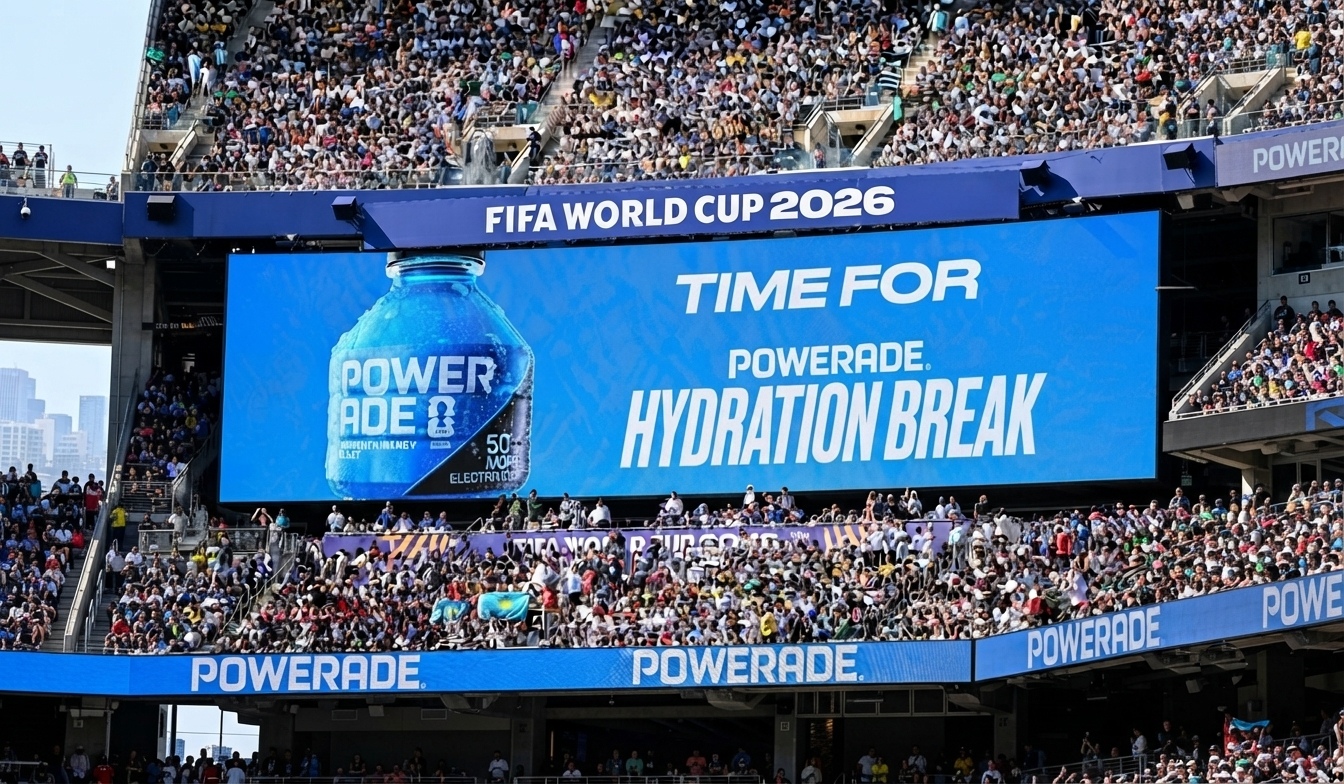
The biggest marketing story of the FIFA World Cup isn’t unfolding on the pitch. It’s happening during one of the few moments when nothing happens at all.
This summer, FIFA introduced sponsored hydration breaks, and Powerade was quick to secure those exclusive branding rights for the two 3-minute breaks. Players gather around coolers. Coaches deliver instructions. Millions of fans continue watching. It’s a simple idea, but a brilliant piece of sports marketing. FOX reportedly paid about $485 million for the English-language broadcast rights to the 2026 FIFA World Cup. Industry analysts estimate the hydration-break advertising alone could exceed $250 million.
If Fox can recover more than half of its $485 million broadcast fee from three-minute stoppages that didn’t exist four years ago. Don’t expect hydration breaks to disappear anytime soon. In the television business, that’s not just a good idea—it’s a game winning goal. The Coca-Cola company (Powerade parent) deserves credit here. They didn’t change the game. They recognized an opportunity hiding in plain sight and moved before any other brand did. Reports indicate that Powerade is generating tens of millions of brand impressions during a single FIFA match. That’s astonishing considering how many games are played in the FIFA World Cup
Soccer Purists Push Back on FIFA Hydration Breaks
Not everyone is celebrating. Almost immediately, former players, commentators and plenty of fans argued that hydration breaks interrupt the natural rhythm of soccer. The beautiful game, they say, doesn’t need another commercial interruption. It’s one more step toward turning football into American sports entertainment. Fair enough.
A match that flows uninterrupted for long stretches is part of soccer’s appeal. Nobody buys a ticket hoping to watch players stand around drinking sports drinks while television cameras zoom in on sponsor logos.
But here’s the question nobody seems willing to ask. Why is anyone surprised?
Sports Have Had Sponsorship Interruptions Forever
Soccer didn’t invent commercial hydration breaks or sponsored interruptions. They are simply arriving late to the party and if they want to move their sport forward into the mainstream they better get used to interruptions.
NBA fans have spent years watching officials gather around replay monitors to determine whether a ball grazed someone’s fingernail before drifting out of bounds in the first quarter. A play that takes three seconds to unfold somehow turns into a three-minute production complete with television replays, coach discussions and a commercial break. Players hydrate. Coaches get an unofficial timeout. Television networks sell another round of advertising. Sports marketing at its core.
NFL games are carefully choreographed around television inventory. Baseball has pitching changes that seem to exist on the same schedule as commercial breaks. Nobody loves these interruptions but nobody expects them to disappear either. Soccer isn’t abandoning tradition. It’s following the same economic path every major global sport has already traveled.
The Soccer Purists Counterpoint
The irony becomes even harder to ignore when you look at Major League Soccer in the United States. While FIFA and Fox found a new way to monetize the world’s biggest sporting event, MLS has hid Lionel Messi behind an Apple streaming paywall for years. Millions of American sports fans have never seen greatest soccer player in the world because they had to cough up $100 or more for the MLS Package. Imagine if MLS cut a deal with ABC or ESPN a few years ago. Millions of new fans would be watching Messi and soccer. Advertising moves your sport forward. It creates revenue for the owners, who build nice stadiums, improved concessions and get top tier players, making the whole experience better.
If the soccer purists want to their game to be “pure” then consider removing the flopping. It’s an embarrassment to the players, the organizations and the sport. If a player goes down and medics have to come out, that player must be substituted. Simple. Done. Or perhaps consider stopping the clock when there is an interruption in play so everybody knows exactly how much time is left – like every other sport.
Perhaps this quote from soccer player Mikel Merino of Spain sums it up best regarding hydration breaks,
“There’ll be games where they’re necessary, and others where they’re not. We just have to adapt.”
Play On and Thanks For Reading!
